Showing posts with label Bruges. Show all posts

Sunday, 27 September 2015

The Odd Neighbour

by Sally Branston

Much of Belgium looks a little rough around the edges: buildings are soot-blackened; roads potholed; metalwork rusty and paint peeling. So why do I spend a lot of time there? Well, for a start, petrol is cheaper than in the Netherlands where I live. Secondly, the Dutch haven't quite got the supermarket concept, so a trip to Carrefour at Liège is from time to time a necessity. And thirdly, it's a relief to get away from the acres of modern Dutch housing estates, with their concrete-box houses and their hard-landscaped gardens and box hedging, manicured to within an inch of its life.


Ghent
To illustrate this latter point, I'll tell you about something my art teacher said. I was trying to do a water colour from a photograph of an old, rusty, corrugated-iron shed in the Falkland Islands. The teacher asked me what it was and I told her it was a derelict farm building. "But what is it for?" she asked. "Nothing," I replied. "It's just abandoned. "You would never see such a thing in the Netherlands," she said. "We would knock it down immediately." Which explains the total absence of old buildings where I live.

A British friend told me about a visit from her Dutch neighbour to complain about the front flower bed. Flowers were creeping in a naturalistic manner out of the bed and over the edge of the driveway. "Cut them back where they belong immediately," she was told. "And while you're at it, you replaced your garage door two weeks ago and it hasn't been painted yet."
Belgium is in complete contrast. Forget the quaint tourist paradise of Brugge (Bruges) and think dirt, dereliction and dilapidation. That's Liège (Luik in Flemish). But at least it's interesting. The Christmas market offers the chance to taste food and drink from all over the French-speaking world and every Sunday, there's a massive market all along the banks of the River Maas. It was also the birthplace of Belgium's best-known author, Georges Simenon.

Further down the Maas or Meuse, you find the rather strange city of Dinant, birthplace of Adolphe Sax and a picturesque spot on the way over to France. A citadel perched on top of a cliff overlooks the river where you can take a boat trip or go kayaking.

Sundays in the town of Tongeren, there is an enormous antiques market which takes up most of the town's streets until lunchtime. You can enjoy a Belgian waffle (gauffre) in the oldest inn in the oldest town in Belgium while you're there.

Bruges
Bruges is probably the favourite destination for British tourists and it is certainly pretty. And clean. And expensive. For a change, try its slightly less well known neighbour, Ghent (Gent). You can take a boat ride along the canal or visit one of the five Sunday markets. There's a famous painting to see in St Baaf's Cathedral - the Adoration of the Mystic Lamb - and lots of interesting Flemish architecture. If you're looking for somewhere old and typically Belgian to stay, a hotel with character rather than state of the art facilities, try the Gravensteen, although I wouldn't recommend trying to park anything bigger than a mini in the hotel car park.

Belgium is a country divided by language. In the Flemish areas, if you don't speak Dutch, try English rather than French. In the capital, French is best.

Don't drive unless absolutely forced to. Belgian drivers have to be amongst the worst in Europe. They have little idea what to do with roundabouts; will stop when you're least expecting them to; don't signal where they're going; drive very fast; and leave swerving across the traffic to exit the motorway until the last possible second. Brussels is confusingly signposted for visitors, so go by public transport if possible or at the very least, plan to leave your car in the hotel garage once you've arrived.

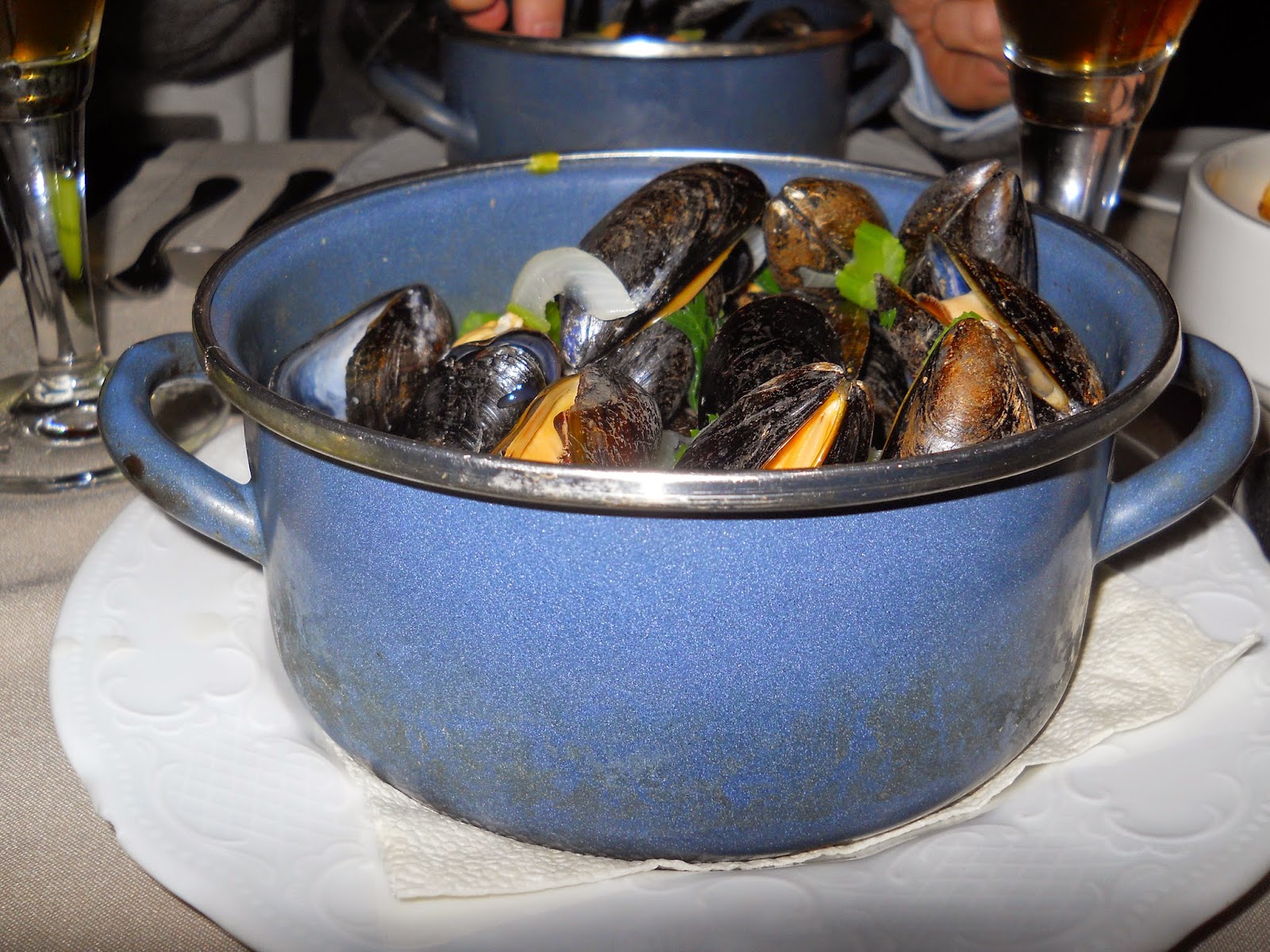
The Grand' Place is one of the most stunning sights in Europe and there always seems to be something going on. There are plenty of cafes in which to sit and have a beer, but the quality of both food and service will improve if you head out a few streets in almost any direction. Mussels are the thing to eat, washed down by any of a huge variety of Belgian beers, each of which comes served in its own special glass. If you don't like mussels, try a carbonnade, a delicious beef stew cooked in the aforementioned beer. The other local speciality is chips (with mayonnaise).

The battlefield at Waterloo is worth a visit if you're in the area, but probably not a special detour unless you're a military history buff. Climb to the top of the Butte du Lion to imagine the scene as it might have been or visit the Musée Wellington.

Carpet of Flowers, Grand' Place
At the end of April or beginning of May, try to time your visit to coincide with the annual opening of the Royal Greenhouses at Laeken. This has to be one of the "must-sees" of Europe for anyone with the slightest interest in either royalty or gardening. Ignore the huge queues - they move very quickly - and every step of the way is of interest. 

Every other year in August, see the Carpet of Flowers when the whole of the Grand' Place in Brussels is covered with an intricate design of begonias.Then have lunch in the enticingly named restaurant called "Sudden Death" (A La Mort Subite), named after a game and a well-known Belgian beer.

And finally, don't forget to look out for a sand-carving or ice-sculpture festival, according to the season. They are well worth the time spent. Happy holidays in Belgium!

First published in VISA issue 72 (Apr 2007)

Monday, 27 October 2014

Eurostar to Bruges (Belgium)


By Elizabeth Johnstone


Brugse Zot, ‘Bruges Fool’, is a delicious beer brewed in the picture perfect Flemish town of the same name. It could also describe those like myself who fall under the town’s spell.
Bruges by Eurostar is a popular destination from the south of England. I booked hotel and train as a Cresta Holidays package through my local Co-op Travel. Ever since the ash cloud, I have booked ATOL-protected packages where possible, although I grant that Eurostar is unlikely to be disrupted by volcanic rumblings in Iceland.

My husband and I live just north of London and our train line goes into Kings Cross Station. It is literally a few steps across the road (avoiding the pupils en route to Hogwarts on Platform 9¾) to St Pancras Station, from where Eurostar leaves. I was impressed by my first trip on Eurostar. The whole operation was slick, and check-in and security were faster than at the airport. We went out in Standard Class, which was not over-spacious but slightly better than the plane. We were upgraded for our return to Standard Premier Class which was definitely roomier and included a light meal with wine. I love being abroad, but I am not a good traveller. The advantage of Eurostar is that the worst bit – the Tunnel – only represents about 20-25 minutes underground. You can easily do that travelling about in London (but then I don’t like that either!)

We left the Eurostar at Brussels South Station. Unfortunately, our connection to Bruges was running late and a twenty minute wait turned into nearly an hour. Once aboard, however, the journey was a pleasant ramble through a flat countryside enlivened by the odd windmill and dozens, if not hundreds, of solar energy installations. The serried ranks of bikes in the bike park at Gent St Pieters Station were absolutely spectacular.

On arrival at Bruges (which, incidentally, is its only name in the UK– no-one has heard of Brugge), we decided to walk into the historic centre. As we trudged past sunbathers in shirtsleeves snoozing in the park, we rather wished we’d taken the bus. We checked into the Hotel Aragon but our room wasn’t ready, so we headed back out into the city. The hotel is well located, a couple of blocks from the Markt, or main square. It was unspectacular but clean and cosy. An unhurried breakfast is always a treat on these trips, and the Hotel Aragon proved no exception.

We bought a three-day Museum Card for 15 euros each and more than got our money’s worth. Unfortunately the Belfort, the 83 metre high tower in the main square, was closed for renovation, but we visited almost everything else on the card. For me, the highlights were the Groeninge Museum with room after room of Flemish masters, the Hospitaal Museum with the fabulous Memling in St-Jan and the Onthaalkerk Onze-Lieve-Vrouw with one of the very few Michaelangelos outside Italy. But, in my opinion, the charm of the place is not so much in outstanding individual pieces. It is a harmonious ensemble of many beautiful buildings whose perspectives are constantly changing as you stumble across a bridge, a reflection or a gilded detail. 
        
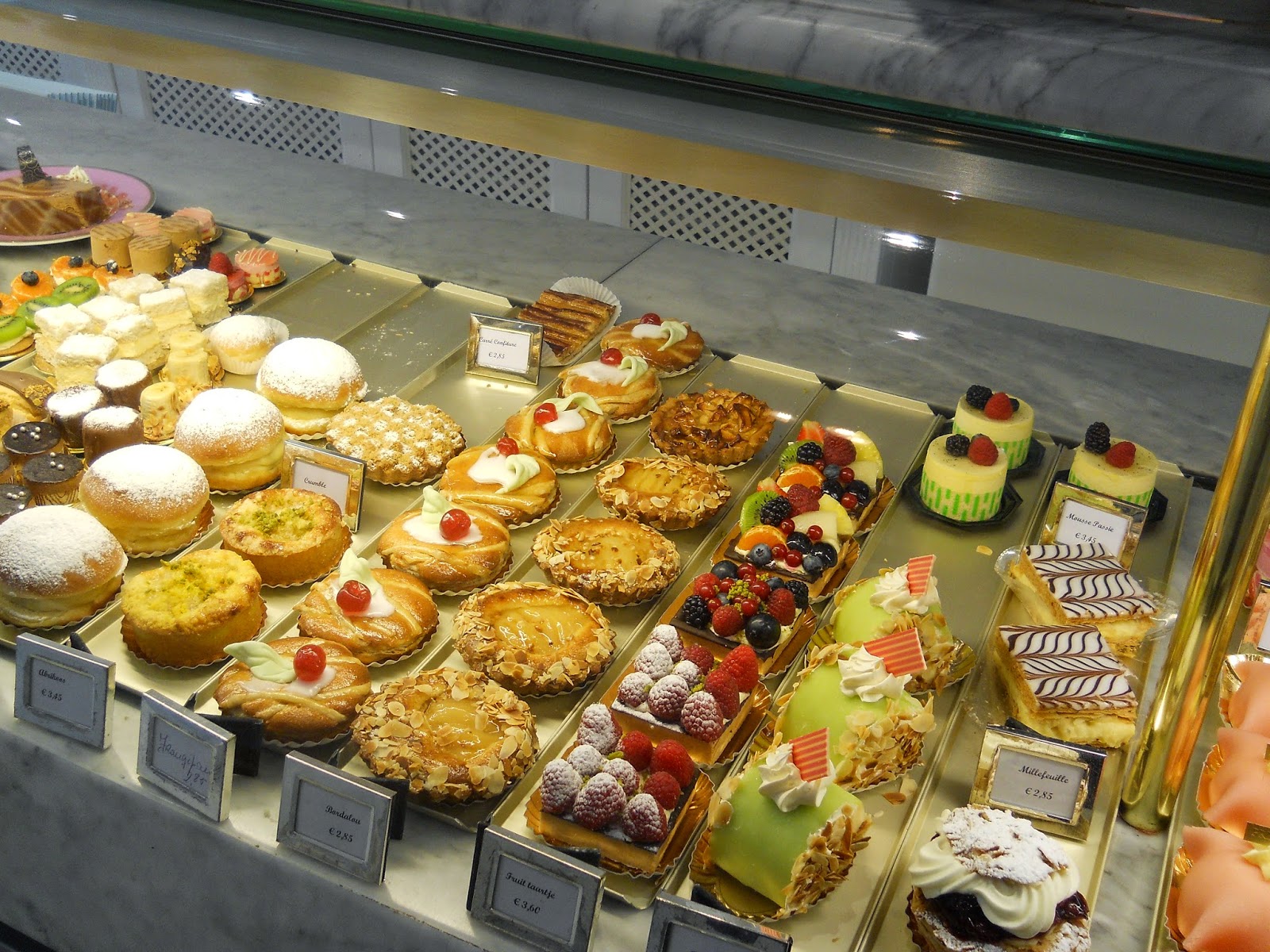
Eating and drinking were fabulous. We treated ourselves to excellent meals at 'tHuidevettershuis in a lovely location overlooking the canal and at De Koetse not too far from the Markt. I adored the gracious living of the Pâtisserie Prestige – a perfect venue for “ladies who lunch”. Prices were not cheap, however we are used to London prices. It was a no-brainer that the nearer you were to the Markt, the pricier everything would be.

As for famous Belgian food and drink – we made a thorough investigation of the following items, purely for scientific purposes, you understand...

  • Chocolate: Belgian chocolate is our gold standard. Can one town support so many fabulous, expensive, artisan chocolate shops? Evidently yes. Some of the goods are obviously bought in, but in many shops you can see the chocolate and other sweets being made at the back. We could hardly walk past these shops without exclaiming to each other at how exquisitely everything was displayed. And of course with Easter coming up, there were lots of bunnies, eggs etc.

  • Mussels: I love these and had them twice in different restaurants. The easiest implement with which to extract them is an empty but still hinged pair of shells. Don't forget crusty bread to mop up the broth.

  • Belgian chips – under no circumstances to be called French fries - are simply perfection, made from fine local potatoes and cooked twice for extra crispness. The mayonnaise with which they are served is more of a mustardy dip. Delicious and surprisingly chic in their dainty paper cones balancing in a wire frame.

As for beer… 600-700+ varieties? Choose your beer from a menu as carefully as you would choose wine, and look out for the strength. Some get up into the 6, 7, 8, 9% strengths, the strongest being those brewed by the monks. I wonder why? My fellow countrymen are famous for coming over and deliberately or naively knocking back these mighty brews as though they were weak English beer with predictable results. Bruges fools, indeed.
Waffles: plain and crisp are best, I think. I had a waffle with bottled cherries which was delicious, but it made the waffle soggy.

Bread and pâtisserie: I shall get into trouble for saying this, but these are up to French standards both in variety and quality. Yes, yes, I too am a native of a small, proud nation perched on the shoulder of its bigger neighbour…

A highlight of the trip was the monthly get-together of West Flanders Mensa in De Vlissinghe which claims to be the oldest pub in town, dating back to 1515. The format was a Games Evening, and our hosts courteously spoke perfect English to us and to each other. Super fun and friendly – Mensa at its best. Just as enjoyable was a delightful long walk out to the windmills and drinks with a Mensan friend on the Sunday afternoon, talking about everything and nothing. I was intrigued about the languages we would find in a bilingual country. The default language of hospitality in a tourist honeypot is English and Bruges was no exception. As a languages teacher, I am always keen to speak in a language other than English, but I was concerned that French might not go down too well in Flanders. I need not have had any such concern. I have a neutral look and could be any northern European nationality. If I was not actually consulting a map, I was addressed variously in Dutch, French and English and any responses in French were met with Gallic courtesy.
My husband and I did all the touristy things except for a horse and carriage trip. I know from experience I am horrendously allergic to whatever a horse swishes around with its tail. The canal boat trip was a better bet and gave a different perspective on the architecture we had admired while strolling about.

Our return trip was straightforward. No problems getting to Brussels, although we had some time to kill once we got there. The Eurostar pulled out of the station just before 3pm local time and I was walking through my front door 3 hours and 15 minutes later. The new concourse at King’s Cross, open that day for the first time, is quite something.
I am a definite convert to Eurostar now and I will retain fond memories of Mensan hospitality in the treasure house which is Bruges. Or even Brugge!

First published in VISA 103 (Jun 2012)